
Introduction
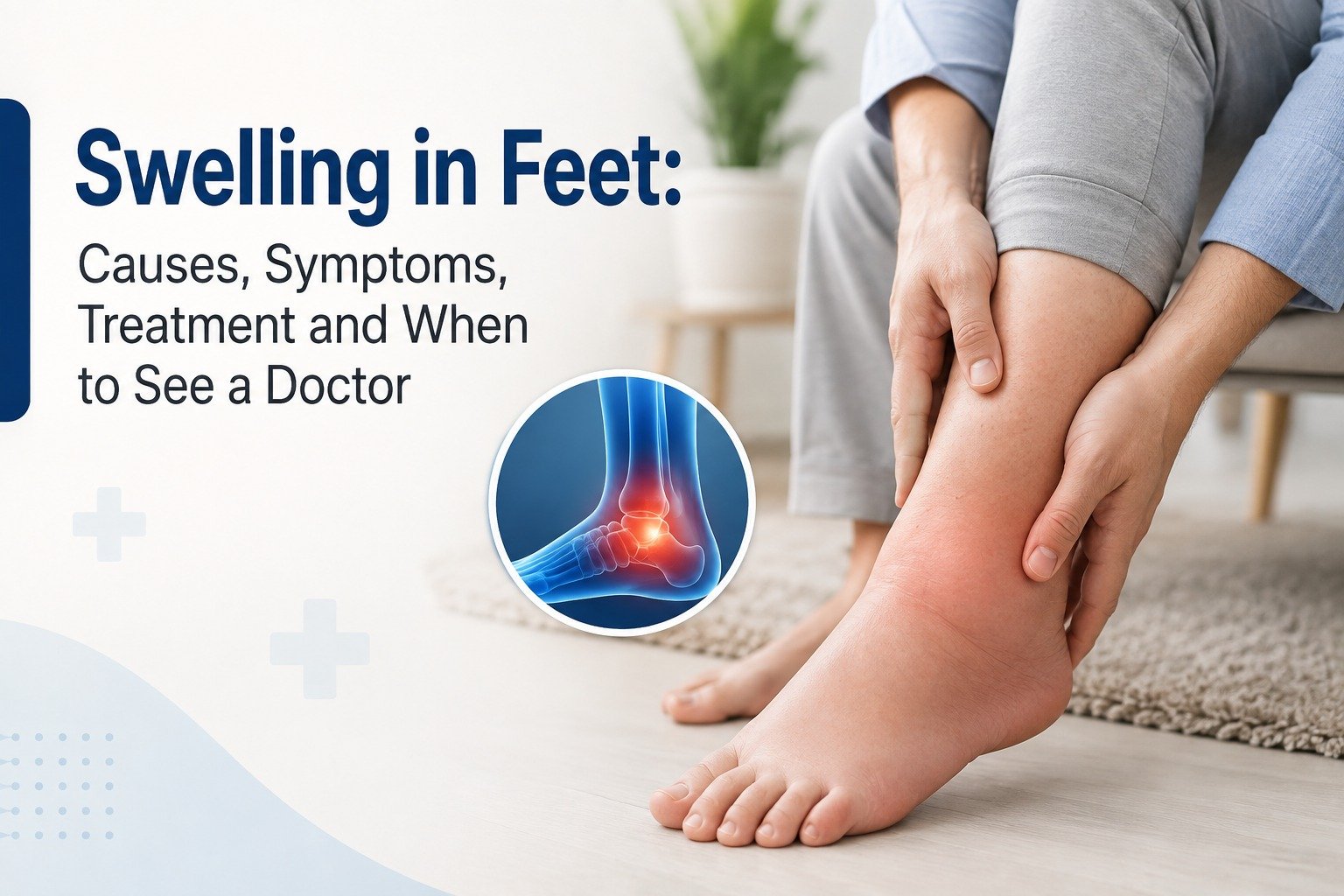
Swelling in the feet is a common problem that can happen after standing for long hours, sitting for extended periods, travelling or eating too much salt. In many cases, mild swelling goes away with rest and simple lifestyle changes. However, persistent or sudden swelling in feet can sometimes indicate an underlying medical condition that needs attention.
Medically, swelling caused by fluid buildup is known as edema. It can affect one or both feet and may also involve the ankles and legs. The cause can range from minor issues such as prolonged standing to conditions affecting the heart, kidneys, liver, veins or lymphatic system.
If foot swelling is accompanied by pain, stiffness or difficulty in walking, consulting an orthopaedic specialist can help identify any underlying bone, joint or musculoskeletal condition.
In this blog we will discuss the causes of swollen feet, associated symptoms and available treatment options that can help you know when medical evaluation is necessary.
What Is Swelling in the Feet?
Swelling in the feet occurs when excess fluid accumulates in the tissues of the feet and ankles. It may make the feet appear larger than usual and can sometimes cause tightness, heaviness or discomfort.
A simple sign of fluid retention is pitting edema. When you gently press the swollen area with your finger for a few seconds, a small indentation may remain temporarily.
Foot swelling may be temporary or persistent. While occasional swelling is often harmless, swelling that keeps returning or occurs along with other symptoms should not be ignored.
Common Causes of Swelling in Feet
There are several possible reasons for swollen feet. Some are temporary, while others may require medical treatment.
1. Prolonged Standing or Sitting
Standing or sitting in the same position for several hours can cause fluid to collect in the lower limbs due to gravity. This is particularly common among people who have desk jobs, travel frequently or work on their feet.
The swelling usually improves after walking, elevating the legs or resting.
2. Excessive Salt Intake
Eating foods high in sodium can cause the body to retain more water. This may result in temporary swelling in the feet, ankles, hands or other parts of the body.
Reducing processed foods, packaged snacks and excessive salt may help reduce fluid retention.
3. Pregnancy
Mild swelling of the feet and ankles is common during pregnancy. As the uterus grows, it can affect blood circulation from the lower body back toward the heart. Hormonal changes can also increase fluid retention.
However, sudden or severe swelling during pregnancy, particularly when accompanied by headache, vision changes, abdominal pain or high blood pressure, requires immediate medical assessment.
4. Injury or Inflammation
An injury such as a sprain, fracture or muscle strain can cause localized swelling. The affected foot may also be painful, tender, warm or difficult to move. Treatment depends on the type and severity of the injury.
5. Venous Insufficiency
Veins in the legs contain valves that help blood return to the heart. If these valves do not work effectively, blood can pool in the lower legs and feet.
Chronic venous insufficiency may cause swelling, aching, heaviness, visible veins, skin discoloration or discomfort that becomes worse after standing for long periods.
6. Heart-Related Conditions
Certain heart conditions can affect the body's ability to circulate blood effectively. This may lead to fluid accumulation, particularly in the feet, ankles and legs.
Swelling associated with heart problems may occur along with symptoms such as breathlessness, fatigue, rapid weight gain or difficulty breathing while lying down.
7. Kidney Problems
The kidneys help regulate fluid and salt levels in the body. When kidney function is impaired, excess fluid may accumulate and cause swelling.
Kidney-related swelling may affect both feet and can sometimes occur along with puffiness around the eyes, changes in urination, fatigue or high blood pressure.
8. Liver Disease
Certain liver conditions can affect protein levels and fluid balance, resulting in swelling in the legs and feet. Abdominal swelling may also occur in some cases.
Persistent swelling without an obvious cause should be evaluated by a healthcare professional.
9. Lymphatic Problems
The lymphatic system helps drain excess fluid from tissues. If lymphatic drainage is impaired, fluid can accumulate and cause lymphedema.
Lymphedema may cause persistent swelling, a feeling of heaviness, skin changes and reduced movement of the affected limb.
10. Certain Medicines
Some medications can cause fluid retention as a side effect. These may include certain medicines used for blood pressure, diabetes, hormonal conditions and other health problems.
If swelling begins after starting a new medication, speak with your doctor rather than stopping the medicine on your own.
Symptoms that may occur with swollen feet
The symptoms associated with foot swelling depend on its underlying cause.
Common symptoms include:
- Puffiness around the feet and ankles
- Tight or shiny skin
- A feeling of heaviness in the legs
- Pain or tenderness
- Difficulty wearing shoes
- Reduced movement of the ankle or foot
- Skin discoloration
- Warmth or redness
- Indentation after pressing the swollen area
If swelling is accompanied by other symptoms such as chest pain, breathing difficulty, severe pain or sudden one-sided swelling, prompt medical attention is important.
When Is Swelling in Feet a Cause for Concern?
Occasional swelling after a long day may not be serious. However, you should consult a doctor if:
- Swelling persists for several days or keeps returning.
- One foot or leg suddenly becomes swollen.
- The swelling is painful, red or warm.
- You experience unexplained weight gain.
- Swelling is accompanied by shortness of breath.
- You have chest pain or difficulty breathing.
- You notice significant changes in urination.
- You have an existing heart, kidney, liver or vascular condition.
- Swelling develops suddenly during pregnancy.
Sudden swelling in one leg along with pain, warmth or redness can sometimes be associated with a blood clot and requires urgent medical evaluation.
How Is the Cause of Foot Swelling Diagnosed?
A doctor will first ask about your symptoms, medical history, medications, lifestyle and how long the swelling has been present.
Depending on the suspected cause, the evaluation may include:
- Physical examination
- Blood pressure measurement
- Blood tests
- Urine tests
- Kidney and liver function tests
- Electrocardiogram (ECG)
- Echocardiogram
- Doppler ultrasound of the legs
- Other imaging tests when required
Treatment for Swelling in Feet
The treatment for swollen feet depends on the underlying cause. There is no single treatment that works for everyone.
Elevate Your Feet
Keeping your feet elevated above heart level for short periods may help reduce fluid accumulation, particularly when swelling is related to prolonged standing or sitting.
Stay Physically Active
Gentle walking and regular movement can improve circulation. If you sit for long periods, take short movement breaks throughout the day.
Reduce Excess Salt
Limiting excessive sodium intake can help reduce fluid retention. Focus on fresh foods and avoid frequent consumption of highly processed and packaged foods.
Wear Comfortable Footwear
Shoes that provide adequate space and support can help reduce discomfort caused by swelling. Avoid footwear that is excessively tight around the feet or ankles.
Compression Stockings
Compression stockings may be recommended in certain cases, particularly for people with circulation-related swelling. However, they are not suitable for everyone, so it is best to use them after medical advice.
Treat the Underlying Condition
If swelling is caused by a heart, kidney, liver, vascular, lymphatic or other medical condition, treating the underlying problem is an important part of management. A doctor may prescribe specific medicines, including diuretics in selected cases. These should only be taken under medical supervision.
How to Prevent Swelling in Feet
Some simple habits may help reduce the risk of recurring foot swelling:
- Avoid sitting or standing continuously for long periods.
- Take regular walking or stretching breaks.
- Maintain a healthy body weight.
- Limit excessive salt intake.
- Stay adequately hydrated.
- Wear comfortable and supportive footwear.
- Follow your doctor's advice if you have an underlying medical condition.
- Take prescribed medicines as directed.
- Avoid self-medicating for persistent swelling.
Conclusion
Swelling in the feet can result from something as simple as standing for too long, but it can also be a symptom of an underlying health condition. Paying attention to how long the swelling lasts, whether it affects one or both feet and whether other symptoms are present can help determine when medical care is needed.
If foot swelling is persistent, recurrent, sudden or associated with pain, redness, breathing difficulty or other unusual symptoms, consult a qualified healthcare professional for proper evaluation. Identifying and treating the underlying cause is the most effective way to manage long-term swelling and protect your overall health.
Frequently Asked Questions (FAQs)
1. What is the most common cause of swelling in feet?
Prolonged standing or sitting, excessive salt intake, minor injuries and temporary fluid retention are common causes. However, persistent swelling may have an underlying medical cause.
2. When should I worry about swollen feet?
You should seek medical advice if swelling is persistent, sudden, severe, painful, affects only one leg or occurs with symptoms such as chest pain or breathing difficulty.
3. How can I reduce swelling in my feet at home?
Elevating your feet, moving regularly, reducing excessive salt intake, staying hydrated and avoiding prolonged sitting or standing may help with mild swelling.
4. Can kidney problems cause swelling in the feet?
Yes. Reduced kidney function can affect the body's fluid balance and may result in swelling in the feet, ankles, legs or other areas.
5. Why is only one foot swollen?
Swelling in one foot or leg can occur due to an injury, infection, venous problems or other localized conditions. Sudden one-sided swelling with pain, warmth or redness should be assessed promptly.
6. Can swelling in feet be a sign of a serious condition?
Yes. Although many cases are harmless, persistent or unexplained swelling can sometimes be associated with heart, kidney, liver, vascular or lymphatic conditions. Proper evaluation can help identify the cause.